Introduction: A New Perspective on Modern Living
What if your home could offer more than just a place to live? What if it could bring together thoughtful architecture, environmental responsibility, everyday comfort, and a stronger sense of community?
At Habitat 854 by Aesthetic Developers, this vision shapes a contemporary residential development in Kulambiro, Kampala. Designed around sustainable building principles and shared living experiences, Habitat 854 reflects a growing approach to residential architecture—one that considers not only the building itself but also the people who live in it and the environment around it.
From passive design principles to communal amenities and carefully considered outdoor spaces, the development aims to create a residential environment where comfort, functionality, and sustainability work together.
1. Sustainable Architecture That Puts People First
Sustainable architecture is about more than using environmentally friendly materials. It involves designing buildings that make better use of natural resources, improve indoor comfort, and support long-term usability.
In a city like Kampala, where natural light, ventilation, and changing weather conditions influence everyday living, thoughtful architectural design can make a meaningful difference.
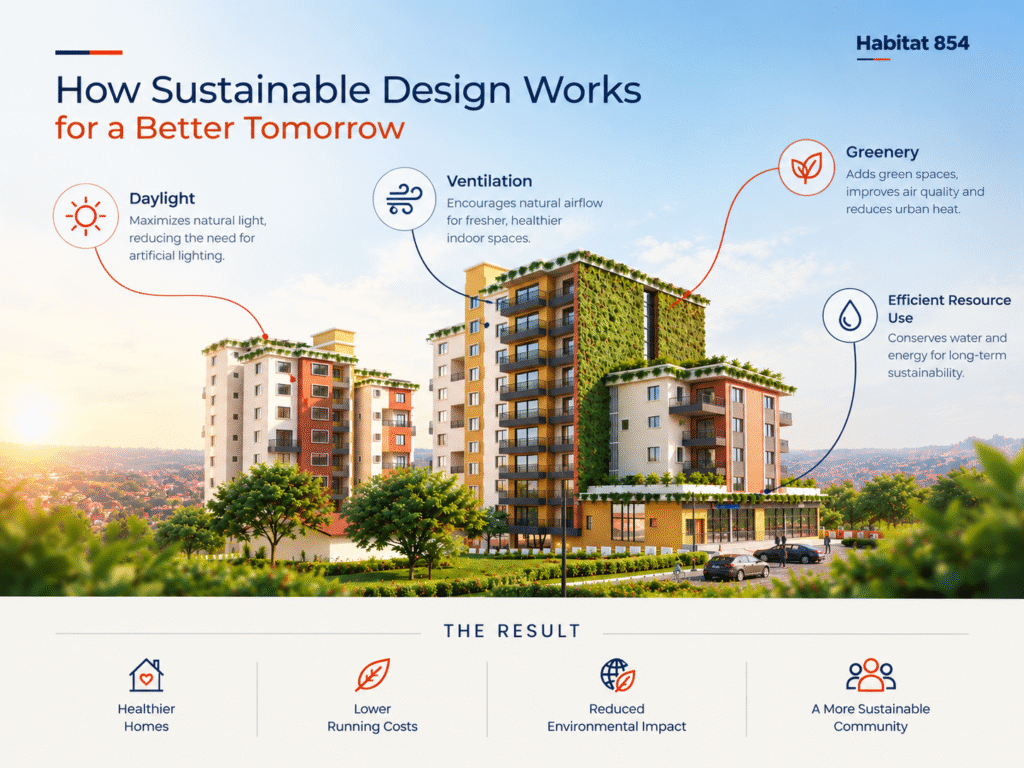
Habitat 854 incorporates passive design principles intended to encourage natural light and ventilation within its living spaces. These features can help create brighter, more comfortable interiors while reducing reliance on artificial lighting and mechanical cooling when conditions permit.
The project’s architectural approach also considers its surrounding neighbourhood. By responding to the site’s natural contours and suburban setting, the design aims to complement Kulambiro rather than overpower its existing character.
The result is an approach to residential development that places equal importance on architectural identity, practical living, and environmental awareness.
2. Designing for Natural Light and Ventilation
A comfortable home begins with the way its spaces are designed.
Natural light can make interiors feel more open and welcoming, while effective ventilation helps support indoor air circulation and comfort. These elements are particularly valuable in residential buildings located in tropical climates.
At Habitat 854, passive design principles are intended to bring natural light and ventilation into apartment spaces. This approach places emphasis on making the most of the surrounding environment rather than relying exclusively on artificial systems.
Thoughtful window placement, building orientation, and spatial planning can all contribute to a more pleasant indoor experience.
For residents, the benefits of well-considered design can extend beyond aesthetics. A brighter, well-ventilated home can support everyday activities, improve the feeling of spaciousness, and contribute to a more enjoyable living environment.
3. Sustainability Beyond the Building’s Appearance
A building’s sustainability is not determined by its façade alone. It also depends on how resources are managed throughout its operation.
Habitat 854’s published project information identifies several sustainability initiatives, including rooftop solar panels, rainwater harvesting, a biodigester, and a sewage treatment plant.
These systems address different aspects of resource management:
- Solar energy: Rooftop solar panels can help harness renewable energy and reduce reliance on conventional electricity, depending on system capacity and actual usage.
- Rainwater harvesting: Collecting rainwater can support appropriate non-potable uses and help manage water resources.
- Biodigester: A biodigester can support the treatment of organic waste through biological processes.
- Sewage treatment: On-site treatment infrastructure can support responsible wastewater management when properly operated and maintained.
Together, these measures reflect a broader approach to sustainable development, where resource efficiency and building performance are considered alongside architectural design.
The long-term environmental benefits depend on system specifications, maintenance, and actual operational performance. Nevertheless, incorporating these measures into a residential development demonstrates the importance of planning for resource responsibility from the outset.
4. Community Living: More Than Just an Apartment
A well-designed residential environment should support the way people live, interact, and spend their time.
Habitat 854 incorporates shared spaces and amenities intended to create opportunities for recreation, relaxation, work, and social interaction.
Its published amenities include a central courtyard, a swimming pool, an indoor gym, a co-working space, an outdoor play area, and a landscaped terrace.
Each space serves a different purpose while contributing to the overall residential experience.
A Central Courtyard for Shared Experiences
Courtyards can help create a visual and social centre within a residential development. They provide a shared setting that can make a building feel more connected and welcoming.
At Habitat 854, the central courtyard forms part of the development’s community-focused planning.
A Landscaped Terrace to Unwind
Outdoor spaces offer residents an opportunity to step away from their indoor routines. A landscaped terrace can provide a place to relax, enjoy the surrounding views, and spend time outdoors.
At Habitat 854, the skydeck terrace is designed to offer an outdoor retreat with panoramic views of the surrounding area.
A Swimming Pool and Indoor Gym
Access to recreational facilities can make it easier for residents to incorporate physical activity into their everyday routines.
The planned residential amenities at Habitat 854 include a swimming pool and an indoor gym, supporting a lifestyle that brings recreation and exercise closer to home.
An Outdoor Play Area for Children
Families often consider safe, convenient spaces for children when choosing a home.
An outdoor play area can provide a dedicated setting for play, exploration, and interaction with other children, helping make shared residential spaces more family-oriented.
A Co-Working Space for Modern Professionals
The way people work has changed, with remote and flexible working arrangements becoming increasingly relevant.
A dedicated co-working space within a residential development offers an alternative setting for focused work without requiring residents to leave the premises for every work session.
Together, these shared amenities help shape Habitat 854 as more than a collection of individual apartments. They contribute to a residential concept built around convenience, shared experiences, and everyday functionality.
5. A Residential Development That Responds to Its Surroundings
The relationship between a building and its neighbourhood is an important part of responsible architecture.
Habitat 854 is located in Kulambiro, Kampala, and its design considers the character of the surrounding suburban landscape. The site’s natural contours have informed the architectural approach, helping the development respond to its setting.
This site-sensitive approach matters because residential buildings do not exist in isolation. Their scale, appearance, outdoor areas, and relationship with neighbouring properties all influence the wider urban environment.
By considering the landscape and the local context, architects and developers can create buildings that feel connected to their surroundings rather than detached from them.
For residents, this connection can contribute to a stronger sense of place and a more cohesive living experience.
6. Modern Apartment Living for Different Needs
Today’s homebuyers have different priorities. Some seek a practical first home, others need more space for a growing family, and some value the flexibility of a modern apartment close to urban amenities.
Habitat 854 offers 1-bedroom, 2-bedroom, and 3-bedroom apartment configurations, providing options for different household sizes and lifestyle requirements.
Choosing the right apartment involves more than counting bedrooms. Buyers should also consider the layout, storage, natural light, ventilation, privacy, and how the available spaces support their daily routines.
A well-planned apartment can make efficient use of available space while providing areas for rest, work, family activities, and entertaining guests.
By combining different apartment configurations with shared amenities, Habitat 854 aims to accommodate a range of residential needs within one development.
7. Why Sustainable Residential Design Matters for the Future
As cities grow, the demand for housing creates an opportunity to rethink how residential developments are planned and built.
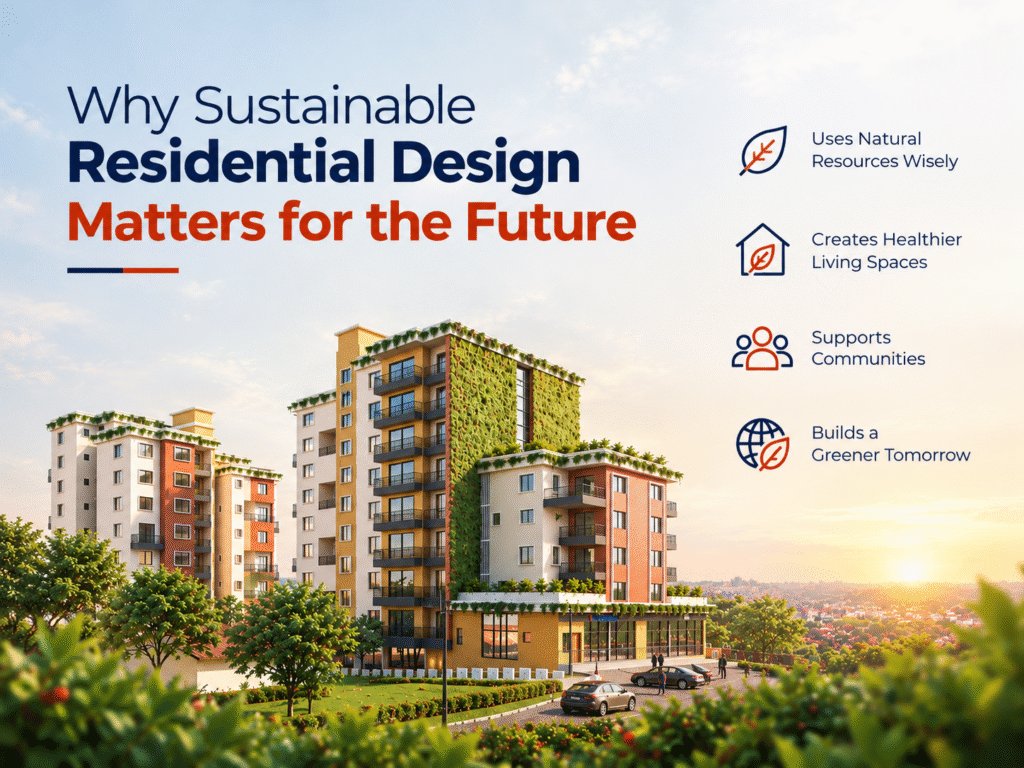
Sustainable design encourages developers to look beyond immediate construction requirements and consider how buildings use energy and water, how they interact with their surroundings, and how they support residents over time.
For homebuyers, this perspective offers a useful way to evaluate a property. Instead of considering only the purchase price or appearance, buyers can examine the building’s design principles, resource-management systems, shared facilities, and long-term maintenance requirements.
For developers, it reinforces the importance of integrating environmental considerations and human needs into the design process.
Habitat 854 reflects this broader approach by bringing together passive design principles, sustainability-related infrastructure, landscaped communal areas, and residential amenities within a single development.
The effectiveness of any sustainable building ultimately depends on how well its design performs in practice, how its systems are maintained, and how residents use the spaces provided.
Conclusion: A More Thoughtful Approach to Community Living
Habitat 854 represents Aesthetic Developers’ vision of bringing sustainable design and community-focused living together in Kulambiro, Kampala.
Through its passive design principles, resource-management initiatives, varied apartment configurations, and shared residential amenities, the development seeks to create a living environment that considers both individual comfort and the wider community.
As the conversation around sustainable housing continues to evolve, projects like Habitat 854 highlight the value of approaching residential design holistically—considering not just where people live, but how buildings can support their daily lives and respond to the environment around them.
Discover Habitat 854
Explore the project, learn more about its apartment configurations and amenities, and connect with Aesthetic Developers to discuss your residential requirements.
Explore Habitat 854 and discover a more thoughtful approach to modern living in Kampala.
Visit the Habitat 854 project page
Frequently Asked Questions
1. Where is Habitat 854 located?
Habitat 854 is located in Kulambiro, Kampala, Uganda.
2. What apartment types are available at Habitat 854?
The project offers 1-bedroom, 2-bedroom, and 3-bedroom apartment configurations. Contact Aesthetic Developers for current availability and pricing.
3. What amenities does Habitat 854 offer?
Published project amenities include a swimming pool, central courtyard, indoor gym, co-working space, outdoor play area, landscaped terrace, and CCTV surveillance.
4. What makes Habitat 854 a sustainable residential development?
The project incorporates passive design principles and identifies sustainability initiatives such as rooftop solar panels, rainwater harvesting, a biodigester, and a sewage treatment plant.
5. Why is sustainable design important when choosing an apartment?
Sustainable design can help improve indoor comfort, encourage more efficient resource use, and support long-term building performance. Actual benefits depend on the design, equipment, maintenance, and building operation.
6. How can I learn more about Habitat 854?
Visit the official Habitat 854 project page to explore the development and contact Aesthetic Developers for further information.